 Start a project
 Menu
Architectural factory finishing · Sunlite Sales
Architectural finishes selected for the way the building will perform.
AMF's sister company, Sunlite Sales, applies liquid PVDF and architectural powder-coating systems for aluminum building products. We help fabricators, glazing contractors, architects and project teams align the coating chemistry, AAMA performance level, color, exposure and production requirements before finishing begins.
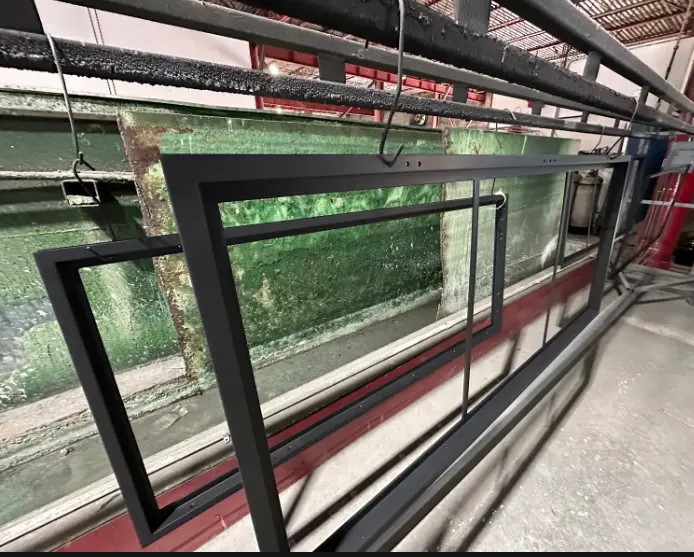
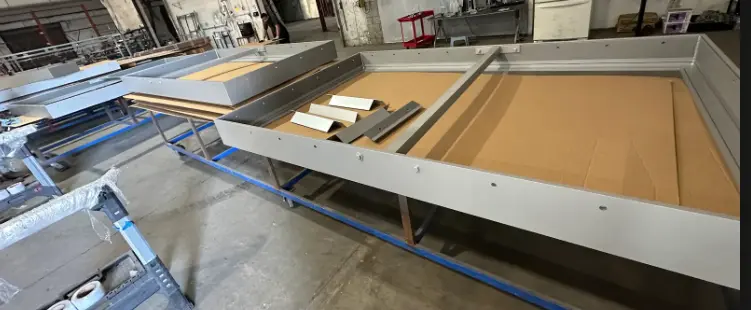
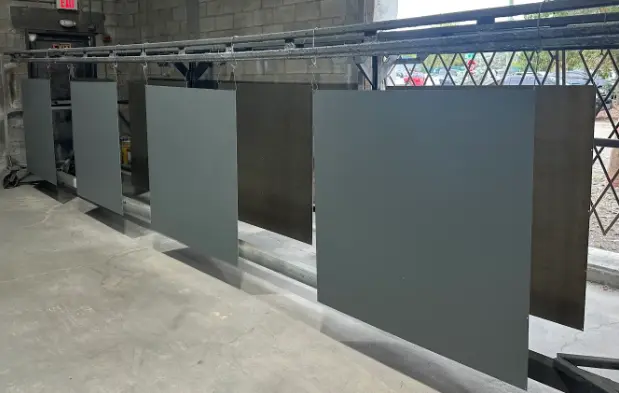
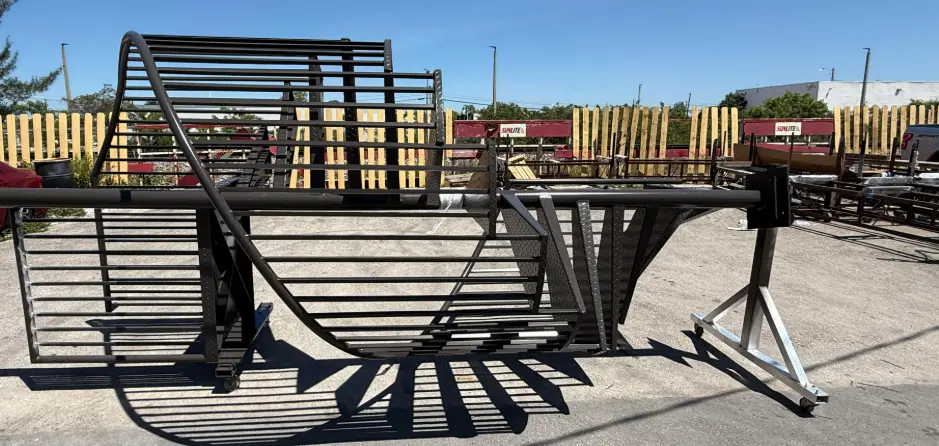
Opa-locka, FloridaLiquid PVDF + architectural powderAAMA 2603 · 2604 · 2605 systems
A closer view of the work
More opportunities to observe the finish as it develops.
Sunlite's manual workflow is an operating format, not a claim that manual is inherently superior. Its practical value is visibility. Technicians remain close to the material through loading, preparation, application, cure and unloading, creating more opportunities to notice how a part's geometry, surface condition, color or film appearance is responding before it leaves the facility.
Closer visual observation Flexible component geometry Project-specific masking + racking Small runs + oversized pieces
Understanding the specification
AAMA numbers describe performance, not simply paint type.
AAMA 2603, 2604 and 2605 are performance specifications for organic coatings on architectural aluminum. The specified level should follow the building's exposure, expected service life and appearance requirements. The coating chemistry, pretreatment, application and cure must work together as a system.
01AAMA 2603
Basic performance
Interior components and select light-duty exterior applications.
One-year South Florida exposure benchmark for color and gloss performance.02AAMA 2604
High performance
Residential and light-commercial exterior aluminum where stronger weathering performance is required.
Five-year South Florida exposure benchmark with tighter color and gloss limits.03AAMA 2605
Superior performance
Monumental architecture, curtain wall, coastal fenestration and long-service-life exterior assemblies.
Ten-year South Florida exposure benchmark and the most demanding AAMA level for exterior architectural aluminum.Preferred for severe South Florida exterior exposureAAMA compliance belongs to the complete, tested coating system and application process. “Kynar,” “PVDF,” “fluoropolymer” and “powder” describe different parts of the finishing conversation; none of those words alone establishes performance.
What actually determines service life?
The topcoat is only one part of the answer.
A premium resin cannot compensate for a poorly prepared substrate, an incompatible primer, insufficient cure or a product design that traps saltwater. Durable architectural finishing is a system of connected decisions.
Substrate + pretreatment
Cleaning and chemical pretreatment establish the surface the coating must bond to. Coastal film integrity often begins here, below the visible color.
Primer strategy
The specified primer supports adhesion and corrosion resistance and must be compatible with the substrate, pretreatment and topcoat family.
Resin + pigmentation
Resin chemistry drives weathering behavior, while pigment selection strongly affects long-term fade, chalk, gloss and color stability.
Film build + coverage
More thickness is not automatically more protection. The correct dry-film range, edge coverage and uniformity must follow the approved system.
Cure + process control
Part temperature, dwell time and coating-specific cure requirements determine whether the applied film develops its intended properties.
Design + exposure
Salt traps, dissimilar metals, drainage, fasteners, horizontal surfaces and maintenance access can control real-world performance after installation.
Choosing the coating route
Liquid PVDF or powder? Start with the exposure and the spec.
Both technologies can be excellent. The expert decision is matching the correct formulation and AAMA level to the component's real service environment.
Liquid fluoropolymer
70% PVDF systems
- Exceptional long-term color and gloss retention
- Strong resistance to ultraviolet exposure, humidity and chemicals
- Proven choice for monumental and coastal architectural aluminum
- Extensive solid, mica, metallic and special-effect color capability
- Commonly built as primer + color, with an approved clear when required
Electrostatically applied powder
Polyester + fluoropolymer systems
- Typically thicker, harder films with strong handling and abrasion resistance
- Efficient transfer with no liquid solvent carrier
- Useful for complex shapes and production-oriented batches
- Polyester, super-durable polyester and fluoropolymer chemistries are not equivalent
- Specific premium fluoropolymer powders can meet AAMA 2605
Why specify three coats?
A third layer should solve a project requirement, not become a marketing phrase.
A typical three-coat liquid PVDF system combines a corrosion-resistant primer, a pigmented color coat and a compatible clear topcoat. Clear coats are commonly used to protect selected metallic or exotic pigmentation and can add another barrier between the environment and the color layer. They are not automatically required or automatically better. Many solid colors and modern mica systems are engineered as two-coat systems, so the manufacturer's approved formulation and project specification should decide the stack.
Primer supports adhesion and corrosion protection Color coat establishes appearance and hiding Clear coat protects selected pigments and effects
03Clear topcoatSelected metallic, exotic and severe-service systems
02Color coatPVDF resin, premium pigmentation and specified appearance
01PrimerAdhesion, substrate protection and system foundation
00Prepared substrateCleaned and pretreated architectural aluminum
Why South Florida changes the decision
High UV, moisture and airborne salt punish weak specifications.
South Florida combines intense solar exposure, heat, humidity, rainfall, salt-bearing air and wind-driven contaminants. Premium 70% PVDF systems are valued because their fluoropolymer chemistry resists ultraviolet degradation and helps preserve color and gloss over long exterior service. The correct pretreatment, primer, pigmentation, film build and cure remain essential to the result.
UVfade + chalk pressureSaltcorrosion pressureHumiditymoisture exposureSandwind-driven abrasion
Speed without surrendering control
Color capability built around real project schedules.
Long custom-paint lead times can hold fabrication and closeout. In-house matching and blending allow us to support small liquid-PVDF quantities and project-specific colors without automatically accepting a typical three-to-four-week manufacturer custom-color lead time.
In-house color matching
Custom development from a color standard, physical sample or approved target, with small-batch liquid PVDF capability.
Stock architectural colors
Bermuda Bronze, Statuary Bronze, Black, Bone White, Arcadia Silver, Sunstorm and Silverstorm selections, with additional reserves available by request.
Custom aerosol bottling
Project-specific touch-up aerosol cans in virtually any developed color for controlled punch-out and service needs.
Manual-batch production
Three ovens and four wet-and-dry booths for components up to 25 feet long, including small quantities and oversized architectural pieces.
Approved liquid AAMA 2605 systems
One applicator. Four leading architectural coating families.
Sunlite Sales is among a limited group of Southeast applicators approved across four leading 70% PVDF liquid coating families used on monumental architectural aluminum.
What does your specification actually require?
A coating RFQ is only as clear as the finish information behind it.
Send the documents you have. We will help identify what is confirmed, what is missing and which details could materially change the system, price or schedule.
Email RFQ details- 01Drawings, quantities and maximum part dimensions
- 02Base metal, alloy and existing surface condition
- 03Required AAMA performance level and named coating system
- 04Color name, code, physical sample, gloss and special effect
- 05Two-coat, three-coat, clear-coat and exposed-edge requirements
- 06Interior, exterior, coastal or high-contact service environment
- 07Masking, racking, packaging, schedule and warranty requirements
Inside the facility
Batch finishing across real architectural geometries.
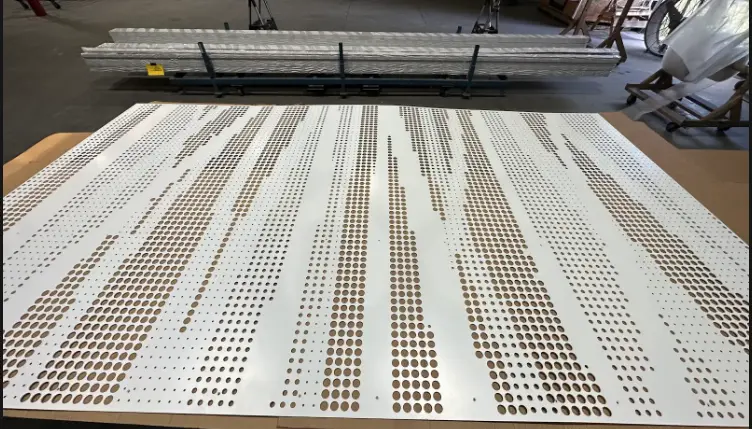
Open any photograph for a full-screen view. The gallery shows large assemblies, extrusions, panels, railings, louvers and custom-fabricated components during production and after finishing.
Start with the drawings, the color or the question
Let's identify the right system before the finishing schedule becomes the problem.
Facility: Opa-locka, Florida · Components up to 25 feet · Manual-batch liquid PVDF and powder coating